Monday, 16 June 2014

Iran and Iraq holding hands?? US investors bury their heads in the sand

Big question! Is Friday's collapse in the FTSE the result of

  • the Bank of England's announcement that interest rates are to rise?
  • because of the horrendous news from Iraq (thank you Messrs Bush and Blair)?
  • or is it the market finally moving away from its current high levels? 
I think it is a combination of all of these things. The Iraq situation generates anxiety, the prediction of higher interest hits the relative return on shares and it is strange the way that a tiny drop of a catalyst in the water suddenly changes the whole mood of the market.

But then we have the strangest thing of all. The US markets make a small rally on Friday. My only conclusion is that the bulk of investors are fearless - not their money. They will go on sitting behind their bank desks and taxpayers will bail out the institutions which will be crucified by the inertia of their traders. They don't care that the rise in UK interest rates may be the first ripple and that a tidal wave of rises may follow. They don't care that oil prices are on the rise because of the prospect of US  forces marching side by side with their arch enemies to push back Sunni Muslim insurgents who have captured large areas and amjor cities in Western Iraq (the insurgents go under the name of ISIS).


The spike in the oil price has yet to become dramatic. But it is a warning of what may happen if the situation deteriorates.


The US markets have hardly moved on the open today. It's all a bit like Tony Blair denying that the invasion of Iraq is the cause of the present situation. I understand he claims that the cause is lack of intervention in Syria. 


Many may die laughing in Iran as they savor the sight of the Great Satan limping about having shot himself in the foot. Only later will they die for real as battle lines are drawn.

Mark Carney may have done UK investors a huge favour. They may pull out of stocks in advance of a bigger world downturn.


Seven years ago I made an analysis of what ails the Middle East. I published it as a short series of essays on a blog called Thinkhard.org. The articles are still there and with the events of that last few days it seems remarkably prescient. Have a look here for an explanation of how the region is cursed by its oil wealth. It is one of five essays. Links to the others are 


Monday, 9 June 2014

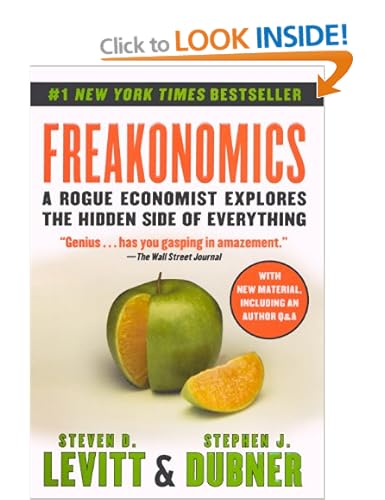
Freakonomics

I have been a fan of Steven Levitt and Stephen Dubner ever since I came across their first book: Freakonomics. They use economists's focus on data to review a huge variety of subjects. The titles of their essays tell it all. They range from How is the Ku Klux Klan Like a Group of Estate Agents? to Why do Drug Dealers Sill Live with their Moms?

I have yet to dip into their latest offering  Think Like a FreakBut I am an avid listener to their podcast. From that I have learnt that the new book contains a chapter on the three (or four) hardest words to utter in the English language: I don't know.  It appears that failure to admit ignorance is close to being hard wired. Children, when tested, will make a stab at the right answer, even when asked a nonsensical question. Adults find it very hard to say that they don't have an answer, especially when faced with peer pressure. Even more so when they assume the role of an expert (example a senior member of the marketing department of a company when queried by the MD about the effectiveness of various advertising methods).


Admitting to ignorance is the first step towards making a proper reasoned decision. There follows the need to seek out data which will help draw the correct conclusion and make the right decision.

But what about the time when data is non-existent or ambiguous. The two Steves (or is it Stephes) have an answer. Their web site provides a coin flipping service. The argument is that if a decision is a close call, and you must decide you might as well flip a coin. On their site you have the choice of a straight flip or
a best of three. A good exercise is to see if you can express a preference before the coin flip - you are being prompted to see if you are truely undecided. The same exercise should be repeated after the flip: are you satisfied or do you really wish it had gone the other way?

I tried it on the vexed question of whether I should be sucked into this ever rising market. I cheated for I already knew my answer. I have decided to be in there. At present nothing is upsetting the apple cart so I have decided to go in, admittedly, with trepidation. I am also ready to withdraw at a moment's notice.

My preference is for shares that will make money over days or a couple of weeks, at most. And that means that UK shares are more or less out.

My US picks are as AAV AXAS  PXLW PAM and ENSV. They come from the El Cheapo's Unisearch in Vector Vest. This has been throwing up winners recently. It looks for shares below $10 that offer excellent value for money, are low risk and the price has been moving upward on a relatively smooth trajectory.

In the UK I have bought a substantial holding in JII. This is an investment trust that specialises in the Indian market. It has done well since the election of a new right wing prime minister who promises to emulate the Chinese model for economic development. I may not agree with all Mr Modi's political stances but he has stated aims of improving relations with Pakistan and fighting corruption. Lets hope he succeeds.


Thursday, 5 June 2014

Sitting on my hands again

Now that I'm back my mind focuses on the 76% of my funds that remain uninvested. At the beginning of my financial year on 6th April only 19% of my funds were invested. All of the increase to 24% is due to the performance of the invested part of my portfolio. Haven't I done well!

And now I begin to think: what can I do to put the remainder of my money to work? If I had put all of my available funds into GVC I would comfortably made my target profit for he year. But I would have committed the cardinal sin: putting all my eggs in one basket. Share trading is an essentially unpredictable occupation. Nobody, and I mean nobody knows what tomorrow will bring. Never be sucked in by gurus who claim to know. They don't. I don't. I make best guesses and I act on those guesses.

Feeling sure is dangerous because it sucks you into making unwise choices. And putting all ones eggs in one basket is one of those stupid things to do. At present GVC accounts for 20% of my available funds. That is already very dangerous. Lets say, for sake of argument, that the share price halved. I would lose 10% of my portfolio. Not a happy prospect. Ideally I would never put more than 10% of my portfolio into any one share so that a 50% price fall would wipe out 5% of my portfolio. Painful but bearable.

Why do I feel so confident about GVC? PE and yield. When I bought the shares the PE ratio was not much more than about 6 and the yield was into double figures. Not only that but the management had a stated policy of paying out very high dividends as they generated cash profits. Those profits also allowed them to expand by buying companies for cash.

My view is that the risks involved in holding so much of my portfolio in that particular share are justified. However as the price rises the justification grows weaker. A cheap share becomes one with an average price tag. A time will come when I have to divest and look for opportunities elsewhere.

But I already have a problem looking for a home for all that cash. I have to keep reminding myself that this is a time of year when I lose money. Better to stash it and buy when the market feels less toppy.

Its hard to resist temptation when the market continues upwards. But I must remember that the crash, when it comes, comes out of a clear blue sky.

Nevertheless its hard to keep sitting on my hands.


Wednesday, 28 May 2014

Back in the saddle once more, not totin' my old 44

Home again! with the sound of more dying on the streets. This time in a drive by shooting in California. What is it about Americans and guns? My guess is, it is all those cowboy movies churned out by Hollywood. They are the true roots of American culture. The fantastic legend of the Wild West has placed an indelible mark on the psyche of the nation. A belief that the all problems can be solved by the good man with his gun. Nothing should be allowed to get in his way. Just look at verse two from Gene Autry's song, especially the fourth line with its terrible scansion:

http://www.metrolyrics.com/back-in-the-saddle-again-lyrics-gene-autry.html 

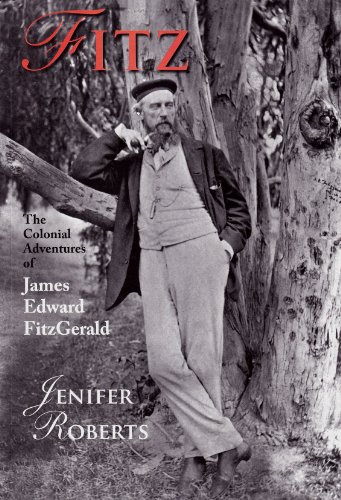
I am recovering from a 24hr plus plane journey. The trip was to launch my wife's new book
Fitz. It was a sparkling success. She has hit the New Zealand best seller lists, for this week at least. It is the biography of the first prime minister of New Zealand and is a rollocking read as attested by ordinary readers and reviewers alike.

So what has the market done while I have been away. I have not been watching as carefully as I should - a lot on my mind: things to see, places to go, people to meet.

I thought I was watching same old, same old: one day up, next day down. As it turns out new highs were hit on the US markets. The S&P arrived with a big fanfare at its first ever close above 1900 last night. It was up just under 2% since I went away with a large part of that coming in the past 4 days.


The Dow made its new all time high on the 13th of May but has since retreated. It is now up just over 1%.


The FTSE, in the mean time has done better, hitting its highest point since the year 2000, just over a week ago on 15th May. It failed to sustain that high and finished the day well down. Since then its performance has been flat. Nevertheless it is now almost 2.5% higher than when I went away.


My portfolio has done well over the period. It was buoyed by the Mr Market beginning to realise the virtues of GVC, and the cashing of a chunky quarterly dividend. Lest hope the market stays with it. There have been two items of news: planned expansion of activity in Scandinavia and in Malta. All paid for out of free cash flow it seems.

Net result is that my portfolio is up 2.5% since I left with just 23% of capital at risk. That means that the return on my invested portfolio was over 10% while I was away.

I now have two big jobs. To assess where the market is likely to go next. You are used to my pessimism by now so it will not surprise you to know that I am wary of all these new highs. And then the more tricky task of deciding if I should try to invest more or to continue to sit on the sidelines. I'll tell you what I decide later this week.

Thursday, 22 May 2014

The Cardboard Cathedral

I hope you guys are enjoying these little vignettes of life in Christchurch New Zealand, a city which as been living with the effects of two devastating earthquakes followed by thousands of aftershocks, for almost four years now.

It is hard to describe the physical consequences and impossible to understand the psychological effects on the worst affected people. There is bitter and ongoing political strife about how the mess should be cleared up. Insurance companies make matters worse by fighting their corner every step of the way. Most recently they won a court ruling. The consequences felt by property owners who have been banned from returning to their homes because of the danger of rockfall are not the responsibility of their insurers. Potential damages, the court ruled, was not actual damage and was therefore not covered by policies. The ban on entry still deprives policy holders of the amenity which they paid to insure but they have no redress.

There are many people still living in garages or with relatives or are paying very high rents because of property shortages. The centre of the city is a largely empty place and there are threats that even some of the buildings still standing, including those that have been repaired, will be demolished to make way for a grand plan for the city. And all this in a place where the authority is close to bankruptcy. In part, the dire finances are the consequence of a decision which resulted in much of the city's own real estate being  under-insured.

Before we arrived in Christchurch we had heard much of the plight of the cathedral which has been severely damaged. There is an ongoing dispute over what should happen. Reports say that the Bishop wanted it demolished and replaced. In the mean time she has had a temporary building erected at considerable cost, but nothing like the amount that will have to be budgeted for the real thing. I am afraid that I think that the old cathedral was no great loss. It was a dull building but it meant a great deal to the inhabitants of Christchurch. What's gone is gone.

Having seen the temporary "Cardboard" Cathedral, as it has come to be known, I am impressed. It feels right and its space has a great impact on the inside.


More important, I think it provides a model that Christchurch decision makers might follow, given the plight of their city, its people, and its financial coffers. Build something cheap and temporary that does the job. It keeps the show on the road. Also it postpones the horrendous cost to fully earthquake proof buildings that are designed to be permanent. Decisions about the longer term can then be taken at leisure and as money becomes available.

The markets

I have chosen my time to be away well. The market continues to languish. Sorry I have so little to say about the markets but these quiet periods do happen.


Sunday, 18 May 2014

Cone City

There are roadworks and roadworks. Here in Christchurch cones on the roads are everywhere. I went into a cafe this morning and there was a little girl playing with a toy cone. Cones, cones, cones and cones.


A massive effort is going into the repair of the "horizontal infrastructure". It's
not just the roads, which are lumps and bumps, it is all the comunications, the electricity, the water and the rest. To be fair much of this has already been done, and wherever we have stayed services work well. But the cones and the earthmoving equipment they isolate from the traffic, change by the day, they even change by the hour. It makes travelling round the city hard work. Residents complain, but coming from the UK, traffic seems to flow remarkably well except at the very busiest times.

I guess that must be partly because the centre of the city is all but empty. I have seen no statistics but some of the population must have drifted away. There are proposals to encourage more workers to come but then there is the problem of where to house them. Single rooms can cost NZ$150 per week. Landlords are doing well. I have heard that some are buying uninsurable houses (earthquake damaged ones) at knock down prices and then take advantage of the booming rental market.

We have now met three people felt sure they were going to die as the ground shook, as the walls swayed and as appliances were ripped from their housings. An oven thrown across the kitchen is no joke. Victims find it hard to experience any rumbling, perhaps a heavy truck passing, without a twinge of anxiety that it is all starting again. We met a lady who has moved away. She does not regret her departure for a moment. And the little quakes continue. There was a 4 level tremor felt in the city just yesterday.

Meanwhile, in the Northern hemisphere the Dow plods on upward, making yet another new high. The pace of growth has slowed. But the push upwards continues. A friend reports a continuing upward pattern. 


He could be right and certainly the FTSE is looking very strong. The UK seems to be one of the strongest recovering economies and its new Central bank governor is settling in well.


Friday, 9 May 2014

Christchurch reconstruction an stock market stalled

I am very busy at the moment, on the other side of the world. I'm visiting Christchurch (NZ). Devastated by its earthquakes it is unrecognizable. Rebuilding is painfully slow. We have spoken with people who have had their lives turned upside down, but most of those we have met are in the process of pulling the pieces back together. Their descriptions of their experiences are terrifying. The worst quake lasted for about 40 seconds but in that time rocking walls and falling furniture convinced them they would die. It was bad in the open too. Cars bucked and liquefaction made roads impassable. Buildings collapsed and were rendered piles of rubble in seconds.  And then there was the immediate aftermath when each survivor wondered if she was alone. The the next few hours were spent trying to discover the fate of their dear ones. Were they trapped, or worse, in other parts of the city. Phones did not work well so long walks across the city were the only way to find out for sure.

Recovery is moving on at snail's pace. An explanation offered is the scale of the devastation in relation to NZ's GDP. The damage is estimated at 20% of the country's GDP. This compares with the Japanese Tsunami which, disastrous as it was is costing a couple of percent of GDP to reconstruct. The reality is that the centre of the city is gone. Roads all around are coned as the infrastructure is repaired. For me the abiding memory is the use of shipping containers to shore up dangerous structures and to protect roads from further rockfalls.  

Here is what is left of the Catholic Cathedral.


In the mean time the stock market stalls. It feels like what was known as the phony war. After the second world war had been declared and before real fighting began there was a sort of ominous silence. I feel the same is happening in the stock market as it dithers rocking gently up and down like a mental patient on an old fashioned medication. Not much else to say.


Those GVC shares have recovered their ex dividend pull back and then some. Long may it last.