Looking at
the charts I begin to get the feeling this is not a change in direction but a
bump in the road. The DOW and the S&P have both arrived at their previous
all-time high and, not unexpectedly, they have taken a pause for breath. All
those doubters, including me, have thought to themselves “This is it boys, end
of the line,” and have dumped their holdings. But the bulls have been sitting
there keen to fill their boots with temporarily cheaper shares. Not so much
arriving at the buffers, more a case of negotiating a series of sets of points.
(I’m enjoying mixing my metaphors.)
If this new
view is right, then the bull market has further to run. If I was wrong before
and am right now what was it about my analysis that led me astray?
I've said
it before and I’ll say it again. All that cash the governments in the major
western economies are dishing out to the banks through QE has to cause inflation
somewhere. The market which is being inflated is the stock market.
But there
is something else which I have ignored: low interest rates. If interest on
bonds and deposits is close to zero and the dividend return on shares is much
higher (around 3% for the DOW for example) then the choice for investors with
cash becomes a no brainer. As long as you are buying solid companies with good
market franchises you can do much better investing in the stock market, even at
current levels, than keeping money on deposit.
For banks
it makes more sense to lend to stock market investors than to small businesses
who, in tough economic times, are bound to be vulnerable.
I plan to
research this idea a bit more thoroughly and will post shortly.
In the mean
time we need to keep a sharp eye on the pattern the market is making to see if
we have run into an enormous sleeping policeman or if we have reached the end
of the road.
Here, for a
change is the chart of the FTSE which shows a very interesting, lumpy picture.

What neuroscience is is telling us about consciousness
The
ravenous brain inside your head is bombarded, every waking moment, with a flood
of stimuli both internal and external. In order to cope with all this
information, the brain ravenously searches for patterns to condense information
into chunks that can be more efficiently absorbed and digested inside the
limited space available for conscious attention.
Daniel Borbegins his book about the latest discoveries in the new science of
consciousness with two anecdotes. He visits his father who has been struck down
by a stroke. If he sits on his father’s right side, the man he used to know is
aware of his presence and is able to converse, sort of. Sitting on his left,
his father is unaware of his son and behaves as if he was not there. The man looks
like his father but displays none of the personality or cognitive ability that
made him recognisable as the man he used to be. The stroke has damaged his brain,
breaking the neurological links that generated his ability to think and respond
in the manner which characterised his personality. Injure the brain and the
mind is crushed.
The second
anecdote describes Bor as the subject of an experiment. An MRI scan reveals that
imagining a physical activity, such as playing tennis, lights up one part of
the brain, while visualising places, such as home, activates a different section.
In the experiment, Bor is asked to imagine playing tennis when he wants to give
the answer no to questions and to visualise wandering around his house when he
wants to answer yes. The experimenter observes Bor’s brain activity on the MRI
monitor; he obtains Bor’s responses by looking into
 his brain. He has no other
access for Bor does not speak. The experiment shows that observing the brain provides
direct access to the mind.
his brain. He has no other
access for Bor does not speak. The experiment shows that observing the brain provides
direct access to the mind.
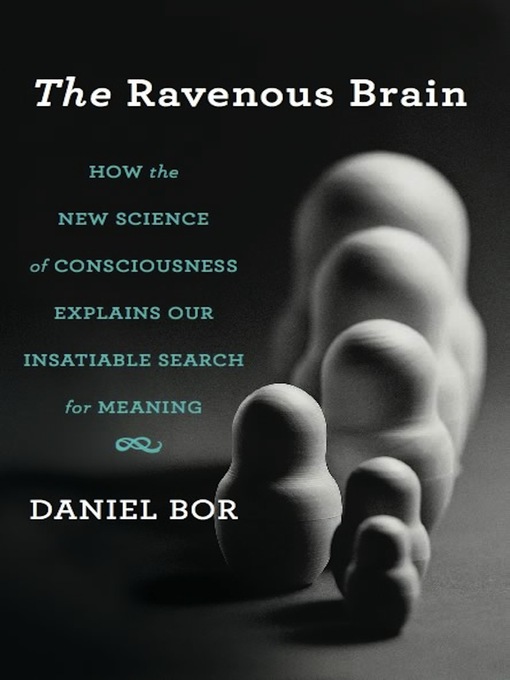
These two
anecdotes point to the conclusion that the brain, a physical, mechanical and
electrical entity, is identical with the mind.
The main thrust
of the book reveals what neuroscience is discovering about consciousness. Bor
began his academic studies in philosophy. He was well-versed in the philosophical
discussion about the separation between mind and body (or soul and body as
philosophers with a more theological bent might prefer). But suddenly, with the
powerful new tool of the MRI scanner, neuroscientists were making discoveries
which rendered those philosophical discussions void. Bor switched his studies from
philosophy to neuroscience.
In this
book, he sets out to describe what is now understood about human consciousness.
The brain is a complex mechanism that works by sending electrical messages from
one neuron to the next in vast cascades. The overwhelming majority of these
messages are passed subconsciously. The brain can be seen to be active without its
owner having any awareness of what is happening. It controls the day-to-day
bodily functions of breathing, moving etc. etc. and none of this normally forms
any part of conscious awareness. This is also true of skills that have been
acquired, such as driving a car or striking the ball with a golf club. All of
this happens outside a person’s consciousness.
The brain
is bombarded all its waking time by an array of sensory input from eyes, ears, nose,
body sensations, and so on. However, the brain is constrained because it cannot
hold more than about four items of information in its awareness at any one
time. It therefore has to select which items to bring to the fore. The four
items change constantly, and make up the ever changing stream of pictures that
is consciousness. The brain is exquisitely attuned to juggling and shuffling
the competing items of information and choosing which ones to present to the
attention. This process of choosing, like most of the brain’s activity, is
unconscious.
A second
strategy that the brain employs to cope with unwieldy volumes of information is
by “chunking.” It collects information which lies in the longer-term memory and
groups it to present composite pictures that can be drawn to the attention. The
brain shows exceptional skill in finding patterns and clues that allow it to
group information to generate a coherent whole which can fill one of those four
precious spots in the brain’s conscious attention. In this way, it can toss and
turn information and find new and ever more complex patterns. It is the
discovery of these patterns that has led to the rise of the human species, with
the ability to garner and manipulate the resources of the planet and create the
world as we know it.
An
intriguing section in the book addresses the question of whether we can
accurately discern consciousness in other animals. Another looks at research
which uses MRI technology to identify consciousness in comatose patients and
tries to forecast which ones are likely to recover at least a part of their
normal consciousness.
The sheer
complexity of the brain’s activities leaves it vulnerable to damage. Even in
its physically undamaged state, it is prone to malfunction. The glitches are
what we know as mental illness. Several conditions can be explained as breakdowns
in the consciousness process. Autism, Bor argues, is caused by the brain’s poor
control of an excessive amount of information presented to the conscious attention.
This explains why many people at the more functional end of the autistic
spectrum may have exceptional skills, despite being handicapped by the need to
limit the sheer quantity of information that assails them. Like more seriously
affected individuals, they withdraw from normal social contact and attempt to
create a world where they can control the stimuli which assail them. At the
same time they have access to greater numbers of stimuli which they can process
into patterns more effectively than the rest of us.
At the
other extreme, schizophrenics seem to suffer from a lowered awareness and find
it difficult to distinguish between information that originates inside their brains
and that which comes from sensory inputs. Their conscious attention is made
aware of information, for example voices which originate inside their heads,
and these inputs are construed as external. Acting on this belief results in the
often bizarre behaviour that characterises the disease.
Research
has shown that many brain malfunctions are associated with poor sleep patterns.
In addition to correcting sleeping disorders, research has shown that meditation
can be effective in improving the functioning of consciousness.
This is a
fascinating book which brings the reader up-to-date with the latest research in
this rapidly developing field of science. Bor’s use of anecdotes, and his
injections of personal experience, illuminate the hard facts that he presents. He
is a philosopher and a human being first, and this makes his review of the bald
scientific evidence all the more appealing.
More Kindling
A loyal
reader has pointed out that I am quite wrong about the Kindle. On the original
machine there is a “Back” button which does exactly what I described as missing
in my last post. You follow a link to the diagram or note and then press “back”
and it’s as though you’ve never been away. I’ve tried it out and it works.
Humble apologies, Kindle folk.
I’ve looked
for an equivalent function on the Kindle application on my iPad and my Android
phone. Here it works slightly differently. You press the link and are taken to
your diagram, and then you press the diagram title to be taken back. I’ve
discovered that this system is poorly implemented, with links often missing.
I have two
remaining bugbears:
·
complex
diagrams are totally mangled.
·
links
to notes in the Ravenous Brain do not exist, so going to the back to read about
the research which proved the points made in the text means that you are back
to square one. You have to reset the farthest point read by going onto the
Kindle management site.


